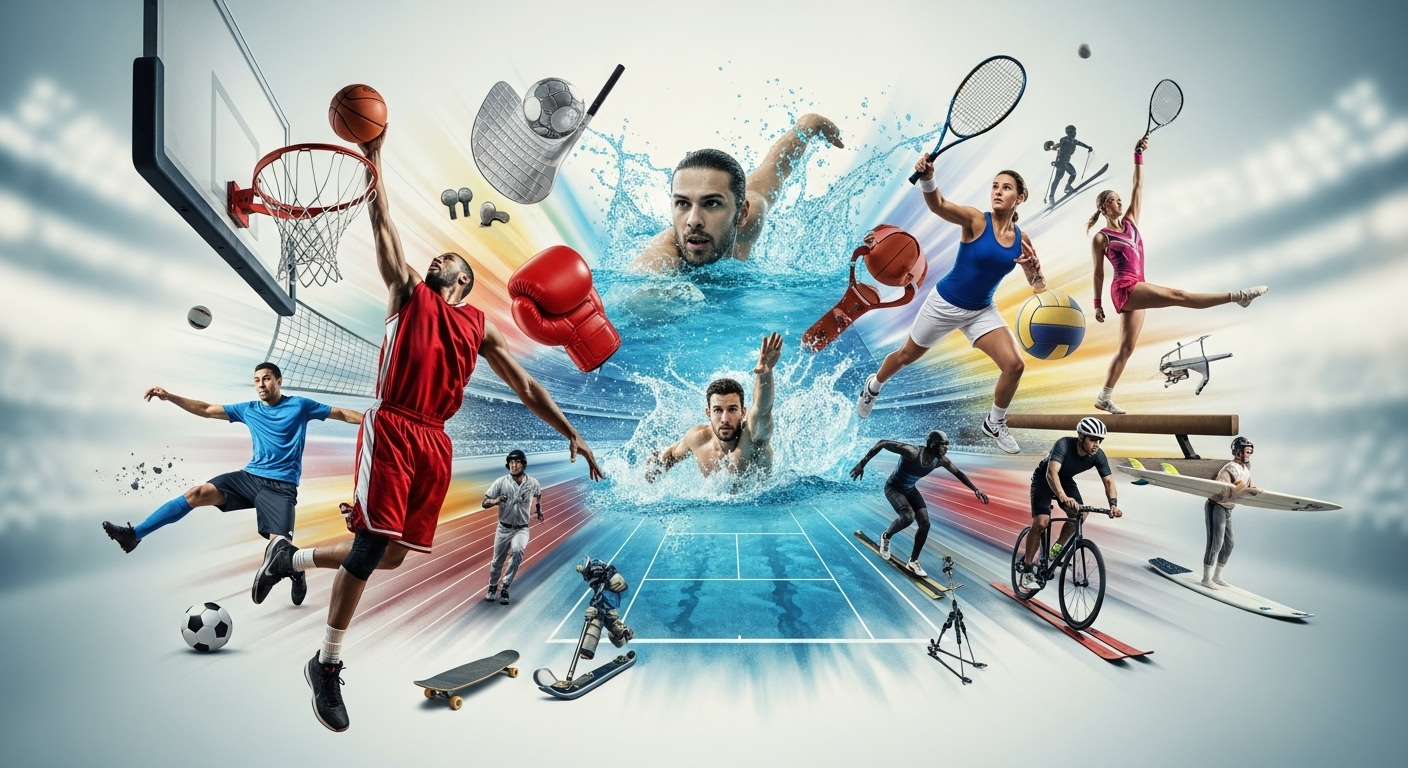







Sports are more than just games—they are a reflection of our history, culture, and the very essence of human drive. From ancient rituals to the highly commercialized and globally celebrated events we know today, the evolution of sports is a testament to our collective passion for competition, unity, and achievement. In this blog post, we will explore the multifaceted world of sports, their social impact, and how they continue to evolve, shaping our lives in ways that go beyond the playing field.
The Origins of Sports: A Journey Back in Time
The earliest forms of sports can be traced back to prehistoric times when physical activities were essential for survival. Ancient civilizations, including the Egyptians, Greeks, and Mayans, engaged in physical contests as both a means of survival and spiritual expression. These activities were not merely for entertainment; they were deeply embedded in religious practices and societal norms.
One of the most notable early examples is the ancient Olympic Games in Greece, which began in 776 BCE. These games were held in honor of the Greek gods, and athletes from different city-states competed to display their physical prowess. Although the nature of these early contests was much different than what we see today, the fundamental concept of human competition was already taking shape.
The Rise of Competitive Sports: From Gladiators to Gladiatorial Games
As civilizations evolved, so did the concept of sport. The Romans, known for their grand spectacles, took sports to new heights with events such as gladiator fights, chariot races, and public spectacles held in massive amphitheaters like the Colosseum. These events were not only a form of entertainment but also a means for emperors to demonstrate their power and keep the masses satisfied.
The gladiators, often prisoners or slaves, fought to the death in front of thousands of spectators, making it clear that, at least in this era, sports were a tool of both control and spectacle. While these violent events are long gone, their legacy can still be seen in modern sports like boxing, mixed martial arts (MMA), and even football, where physical confrontation is an inherent part of the game.
The Formalization of Sports: The Birth of Modern Athletics
The real turning point in the history of sports came during the 19th century, as society began to embrace the idea of organized, formalized competitions. With the Industrial Revolution came urbanization, increased leisure time, and the ability to standardize rules and equipment. Sports moved from informal contests to officially regulated activities.
Football, cricket, and rugby are among the sports that emerged during this period in Britain. The first modern Olympics, revived in 1896, marked a significant moment in the history of sports, introducing the idea of international competition. This era also saw the creation of the first professional sports leagues, which would provide athletes with opportunities to turn their passion into a career.
The Globalization of Sports: From Local to International Phenomena
The 20th century witnessed an unprecedented globalization of sports. Thanks to the advent of radio, television, and, later, the internet, sports were able to reach audiences on a global scale. The world was no longer limited to watching local games; events like the FIFA World Cup, the Summer and Winter Olympics, and Wimbledon attracted viewers from all corners of the globe.
Sports became a universal language, transcending cultural and linguistic barriers. Icons like Pele, Michael Jordan, and Serena Williams became household names worldwide, and the appeal of sports grew exponentially. Teams from different countries or regions now compete for international titles, bringing with them a sense of unity and national pride.
The Role of Technology in Modern Sports
As sports have become more sophisticated, technology has played a major role in shaping how athletes train, compete, and engage with their fans. Innovations in equipment, fitness tracking, and medical science have allowed athletes to push the boundaries of human performance. Technologies like wearable devices monitor players’ heart rates, stamina, and even recovery times, allowing for a more data-driven approach to training.
On the spectator side, the advent of digital media has transformed how fans experience sports. Instant replays, advanced statistics, and virtual experiences have redefined the viewing experience, making it more interactive and immersive. Augmented and virtual reality (AR and VR) are also opening new possibilities for fans to engage with their favorite sports in unprecedented ways.
The Social Impact of Sports: Uniting People, Breaking Barriers
While sports are often viewed as a form of entertainment, their impact extends far beyond the field. Sports have the unique power to bring people together. They serve as a platform for promoting social change, fostering inclusivity, and breaking down barriers that divide societies.
Historically, sports have been instrumental in challenging social norms. Figures like Jackie Robinson, who broke the color barrier in Major League Baseball, and Muhammad Ali, who stood against the Vietnam War, used their platform to influence society in ways that went beyond the game. More recently, athletes like Colin Kaepernick have used their visibility to speak out on issues such as racial inequality, police brutality, and social justice.
Sports also play a significant role in promoting gender equality. The rise of female athletes, particularly in sports like tennis, soccer, and basketball, has inspired millions of young women worldwide. The visibility of female athletes has contributed to a larger conversation about women’s rights, representation, and opportunity in traditionally male-dominated fields.
The Future of Sports: Embracing Innovation and Change
As we look toward the future, it’s clear that sports will continue to evolve. With the rise of esports, the digital age is changing the landscape of competitive gaming. Virtual competitions and online tournaments are becoming increasingly popular, with millions of fans tuning in to watch video games being played at the highest level.
On the physical side of things, advancements in biotechnology, AI-driven coaching, and robotics could revolutionize how athletes train and even how sports are played. Imagine a world where human performance is enhanced by genetic modifications or where robots compete against humans in physical challenges. These possibilities may sound like science fiction, but given the rapid pace of technological progress, it’s not far-fetched to imagine them becoming a reality in the coming decades.
Conclusion: Sports as a Reflection of Humanity
Sports have evolved from ancient rituals to the high-tech spectacles we enjoy today, but at their core, they remain a powerful expression of human nature—our desire to compete, achieve, and unite. Whether it’s a local game played on a neighborhood field or a global tournament that captivates millions, sports continue to shape and reflect society.
As we move forward, the role of sports in fostering social change, promoting inclusivity, and driving technological innovation will only continue to grow. In the end, sports aren’t just about winning—they’re about the stories we tell, the connections we make, and the shared experiences that bring us all closer together.